
Published by Dating in Your 30s
Established adult lives leave fewer unplanned openings
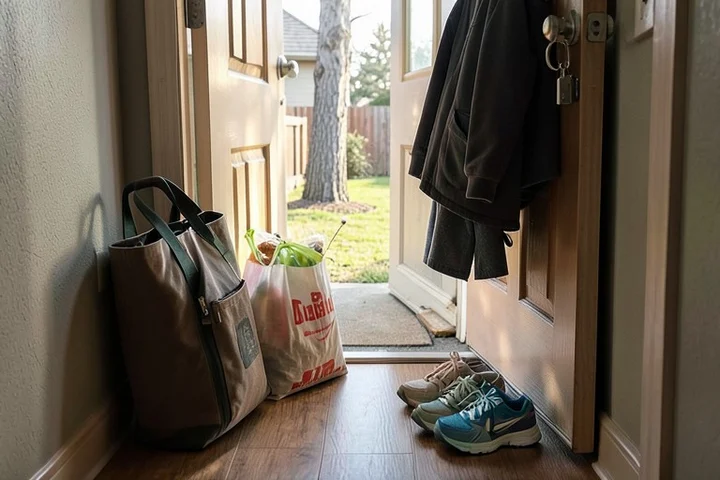
Earlier dating often benefits from repeated, low-effort contact: friends gather in the same places, classmates see one another regularly, and a free evening requires little negotiation. By the 30s, work responsibilities, long commutes, travel, caregiving, parenting, and established routines compress that open space. People still want relationships and lead active lives, yet they have fewer occasions when meeting someone forms part of the week. Even an appealing match must fit around deadlines, custody schedules, a planned trip, or the need to recover after a demanding day.
This turns dating from something that happens alongside everyday life into something that often needs separate coordination. Two interested people can lose momentum because their calendars do not line up, not because attraction is absent. The same constraint affects new friendships and social invitations, so fewer unplanned introductions enter the picture over time. In this setting, the difficulty is frequently logistical rather than personal. Dating after 30 works better when its pace reflects a full schedule and does not depend on the spontaneity of a more open routine.
Why can the stakes feel higher now?
A date in the 30s often carries more implied context because many adults have clearer long-term preferences. Marriage, children, where to live, work patterns, money habits, existing family commitments, and desired daily life all shape whether a relationship fits. None of those subjects requires one universal timeline, and not every dater wants the same future. Their presence means compatibility involves more than chemistry or shared interests. Someone who has spent years building a particular life may pay closer attention to how another person fits within it.
That awareness creates pressure when early uncertainty gets read as a verdict on the future. A first or second date can feel like a test of every major preference at once, especially for someone dating after a breakup in their 30s or after a long relationship. The result is often premature intensity: small differences receive the weight of permanent incompatibility, while a connection that needs time to unfold gets less chance to develop. Standards still matter; the changed expectation is that every major question must be settled before basic interest and trust have time to grow.
More options do not always produce easier choices
Social networks commonly become narrower or more settled with age. Friends pair off, move, focus on children or careers, and spend less time in large, shifting groups where introductions happen naturally. That does not mean someone lacks a social life; it means social contact is more likely to be organized around existing relationships. Dating apps in your 30s appear to solve this by placing many profiles within reach, but access and connection are different processes. A screen supplies candidates without supplying the familiarity, shared setting, or repeated contact that often makes a new person feel easier to know.
Large pools also change how choices are made. Rapid browsing encourages people to turn partial information into firm judgments, while the apparent possibility of another match makes it easy to delay a decision about the one already in front of them. Dating profile mistakes therefore carry extra weight: a vague profile, an overly polished one, or photos that reveal little about daily life invite quick assumptions. Yet a profile is necessarily incomplete, and excessive filtering can remove people before conversation supplies missing context. More options create more sorting work, not a guarantee of clearer choices.
Experience changes both standards and self-protection
Past relationships give many people useful information about what feels stable, respectful, and compatible. Experience can sharpen standards around communication, values, availability, and the practical shape of partnership. It can also make disappointment feel more costly. After a difficult breakup, someone may read ordinary uncertainty as a familiar threat, hold back until certainty appears, or dismiss a promising connection for failing to resemble an idealized sense of safety. Neither greater care nor a wish to avoid repetition is a flaw. Friction arises when self-protection becomes so strong that it treats every unfamiliarity as evidence of danger or every imperfect date as a failed future.
The conditions become more manageable when the dating process is designed to reduce avoidable strain rather than demand constant attention. Bounded app use limits the sense that dating must occupy every spare moment, while recurring social contact creates opportunities that do not depend on a single high-pressure event. Realistic scheduling protects dates from being repeatedly postponed by an already crowded life. Clearer early screening around relationship intentions and practical availability helps reserve deeper emotional investment for people whose circumstances broadly align. These adjustments do not make dating effortless; they make its difficulty more proportionate to the actual task of getting to know another adult.
Dating in the 30s is often harder because adulthood supplies more constraints and more information at once. Recognizing that distinction shifts the problem away from personal deficiency and toward a process that needs better conditions.